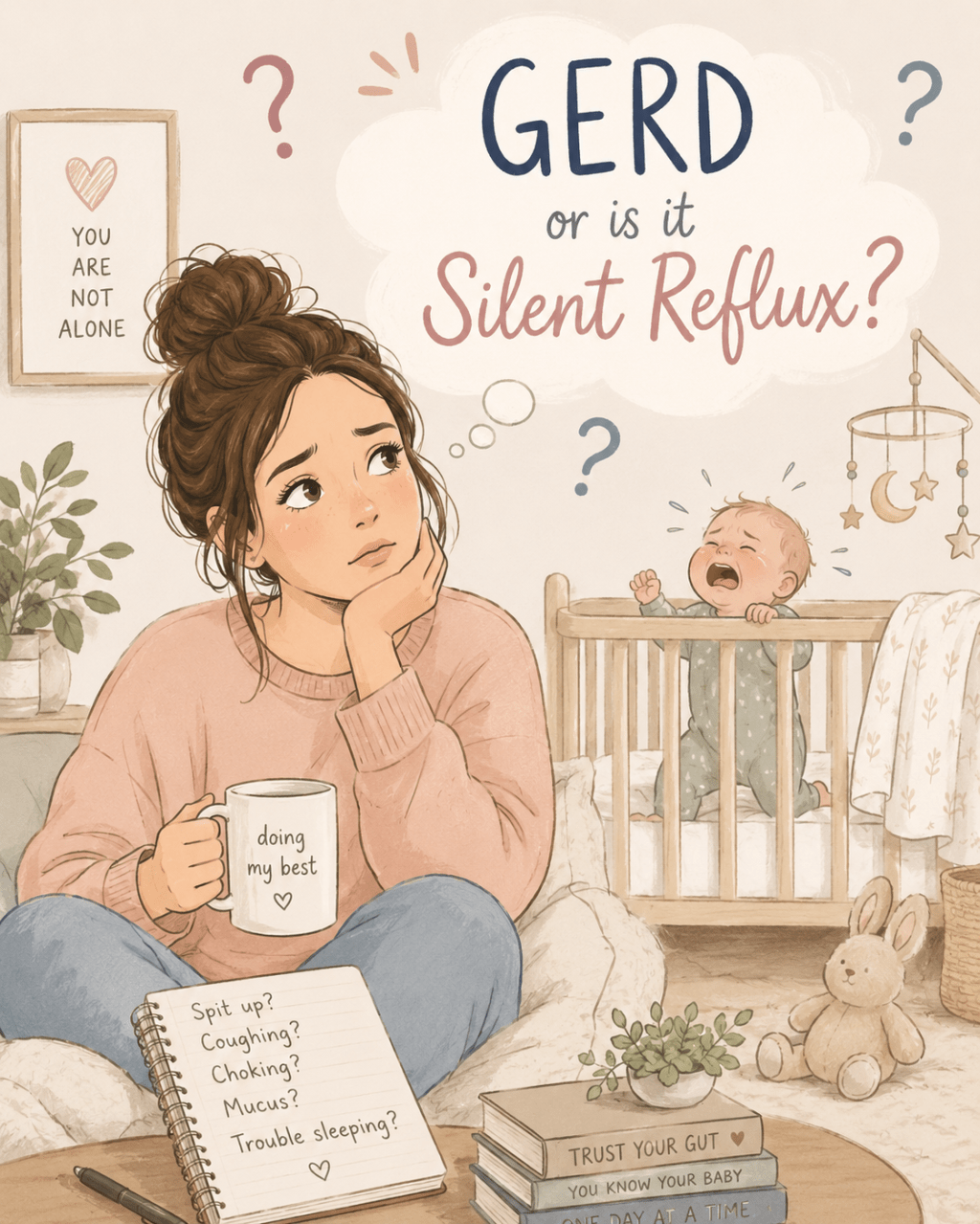
Did you know that it can actually be both?
A 2023 evidence-based review on pediatric laryngopharyngeal reflux (P-LPR) noted that gastroesophageal reflux disease (GERD) and laryngopharyngeal reflux (LPR, often called silent reflux) can present with overlapping but distinct symptom patterns in infants and children, and that both conditions can also be present at the same time.
Symptoms commonly associated with GERD:
- Regurgitation or frequent spit-up
- Vomiting
- Feeding difficulties or feeding refusal
- Irritability or discomfort during/after feeds
- Poor weight gain or failure to thrive
- Heartburn (more common in older children)
- Chest or esophageal pain related to esophagitis
- Nausea
Symptoms commonly associated with Pediatric LPR (silent reflux):
- Chronic coughing
- Choking episodes
- Noisy breathing
- Excessive mucus production
- Swallowing difficulties (dysphagia)
- Apnea or breath-holding spells
- Recurrent respiratory symptoms or infections
- Stridor
- Hoarseness or voice changes (dysphonia)
- Chronic throat clearing
- Chronic nasal or throat irritation
- Sleep-disordered breathing

These findings could mean everything for some parents and their little ones. One of the biggest takeaways from the 2023 review Pediatric Laryngopharyngeal Reflux: An Evidence-Based Review is that some babies may show a combination of symptoms associated with both gastroesophageal reflux disease (GERD) and pediatric laryngopharyngeal reflux (P-LPR), often called “silent reflux.”
Because of this overlap, treatment is not always one-size-fits-all.
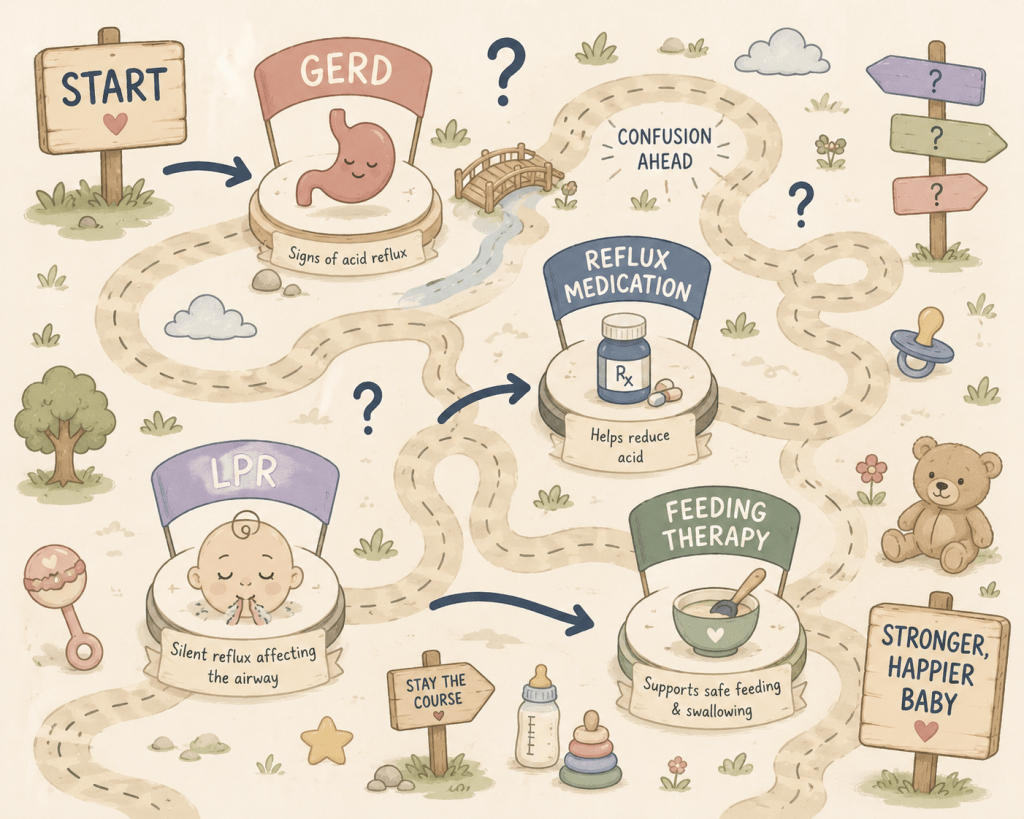
Historically, medications like H2 blockers and PPIs (proton pump inhibitors) have been more commonly used in GERD patients, particularly when acid-related esophageal irritation is suspected. However, the review explains that pediatric LPR may often involve weakly acidic or nonacid reflux events rather than strictly acid reflux alone.
Because of this, many infants with symptoms more consistent with P-LPR may not show major improvement from acid-suppressing medications alone. Instead, supportive approaches such as thickened feeds, feeding modifications, positional strategies, and feeding therapy are often discussed in relation to airway- and swallowing-related symptoms associated with P-LPR.
This may also help explain why some parents feel frustrated when they seek help for suspected silent reflux symptoms and providers are hesitant to immediately prescribe reflux medications, especially after years of concern around overprescribing acid suppressants in infants. While that caution is understandable, this review also highlights how important it is for providers to really listen carefully when parents are describing symptoms, because P-LPR and GERD can overlap in ways that are not always obvious. Some babies may not present with the more classic signs of GERD, and symptoms tied to silent reflux or airway irritation can sometimes be easier to dismiss if providers are only looking for textbook reflux presentations.
At the same time, the overlap between GERD and P-LPR can make things incredibly confusing for families. There may be cases where a baby’s symptoms appear to point more strongly toward silent reflux or P-LPR, while still having some acid-related GERD involvement as well. In those situations, treatment plans may look very different depending on the child’s symptoms, clinical findings, and response to therapy. This is why a more open-minded and individualized approach matters so much, rather than immediately ruling reflux in or out before fully hearing the full picture parents are trying to relay.
Had I known this sooner, I probably would have done some things differently and likely would have stayed with thickened feeds the entire time.
At first, thickened feeds did not seem to help at all. Honestly, it felt similar to hearing the same generic advice over and over, like “just hold your baby upright for 30 minutes after feeds,” while watching my baby continue to struggle. Looking back now, I personally believe a lot of her symptoms early on were being driven more by GERD and acid-related reflux, which is why medication seemed to help more during that stage.
But over time, her symptoms changed.
Eventually, the medication stopped seeming to make much of a difference, while thickened feeds suddenly became one of the most helpful interventions for her. There was so much confusion and back-and-forth along the way trying to understand why certain things worked at one stage but not another.
What stood out to me most from the review Pediatric Laryngopharyngeal Reflux: An Evidence-Based Review was the idea that GERD and pediatric laryngopharyngeal reflux (P-LPR) can overlap and may not always present the same way throughout infancy. For our family, that overlap seemed to mean that treatments which previously did not work well on their own became more helpful at different points throughout her first year of life.
Source: Pediatric Laryngopharyngeal Reflux: An Evidence-Based Review (2023)

